Home About Projects My Toolkit Experience Achievements Education Contact
← Back to Projects
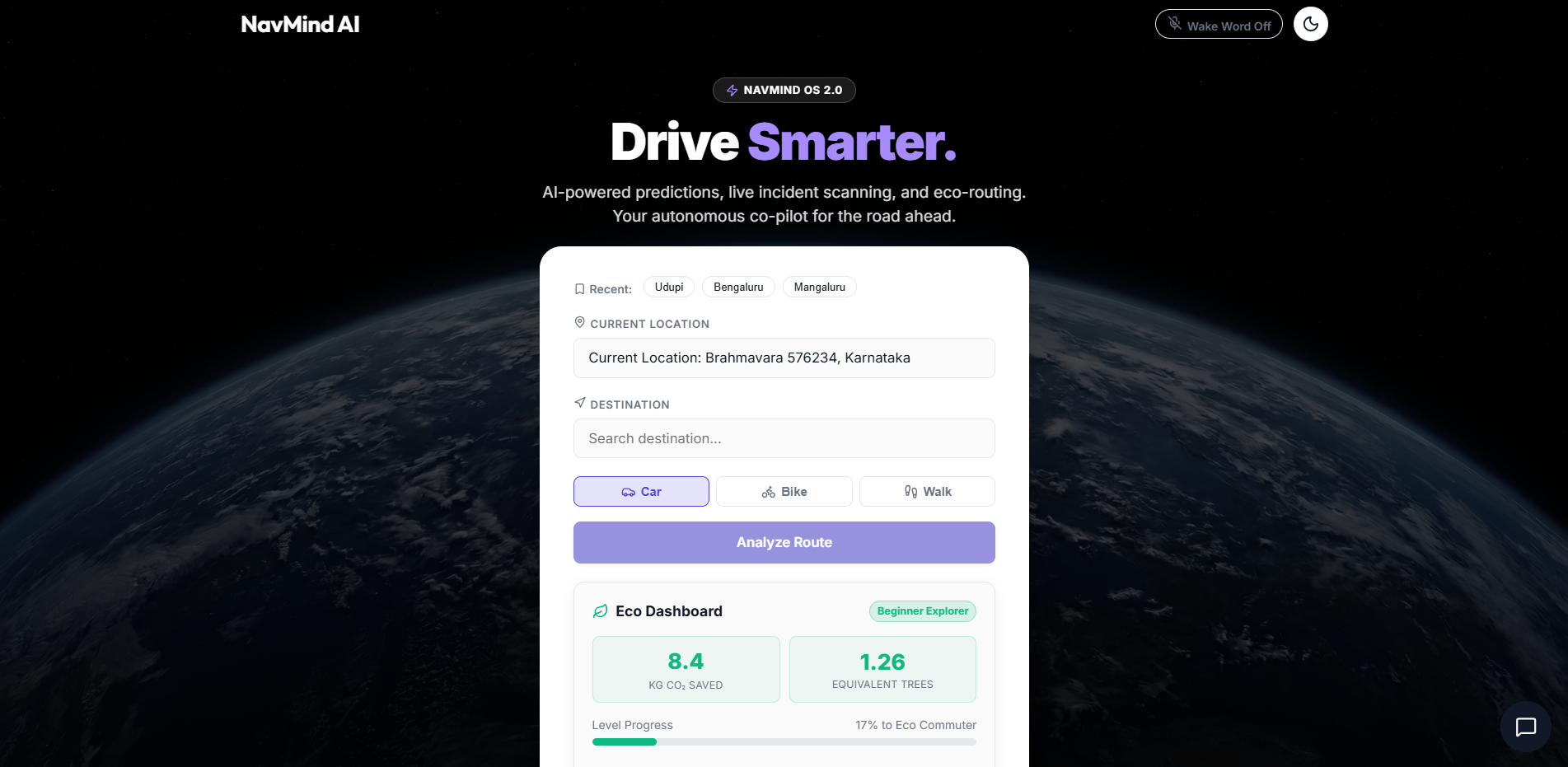
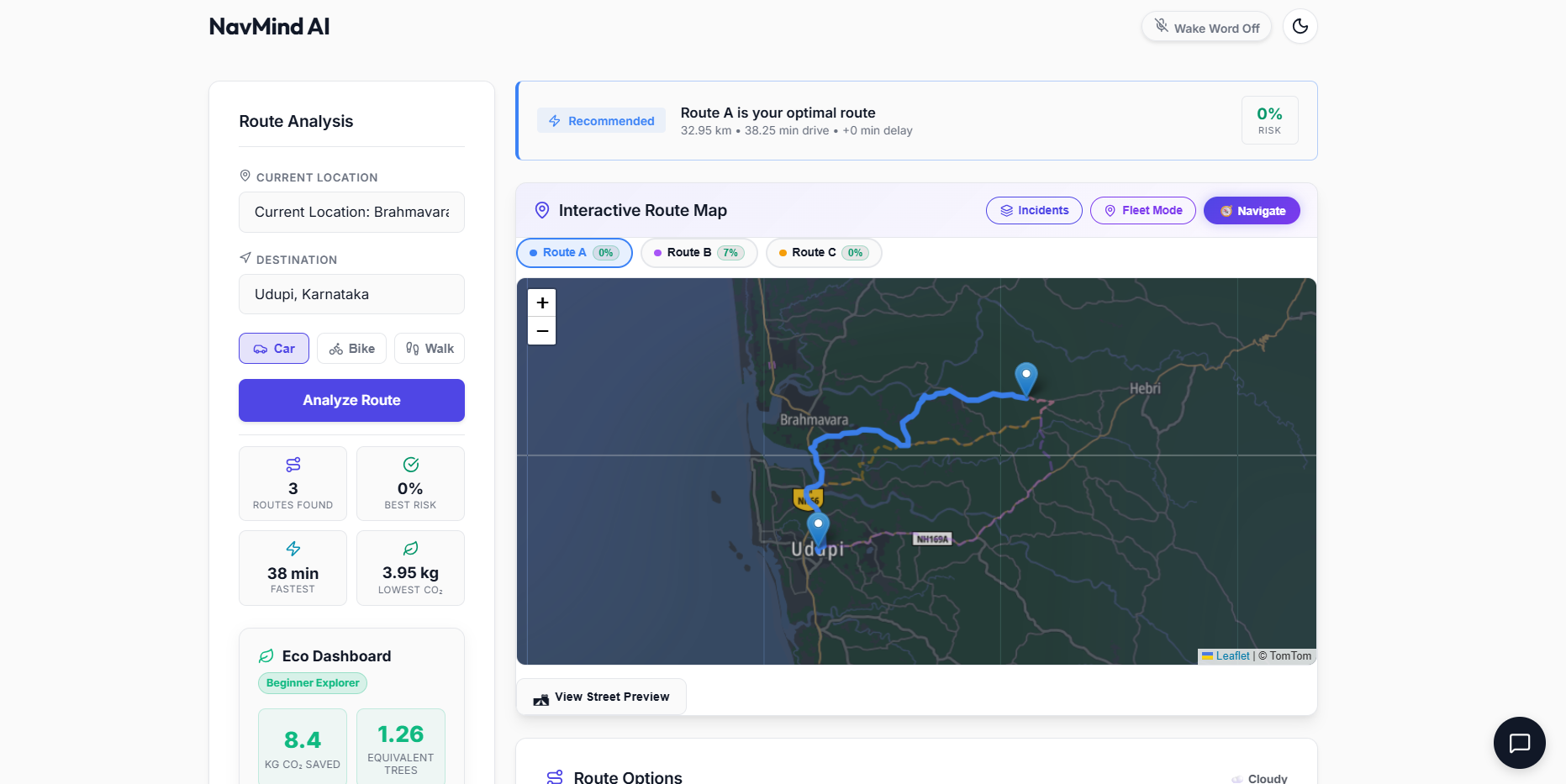
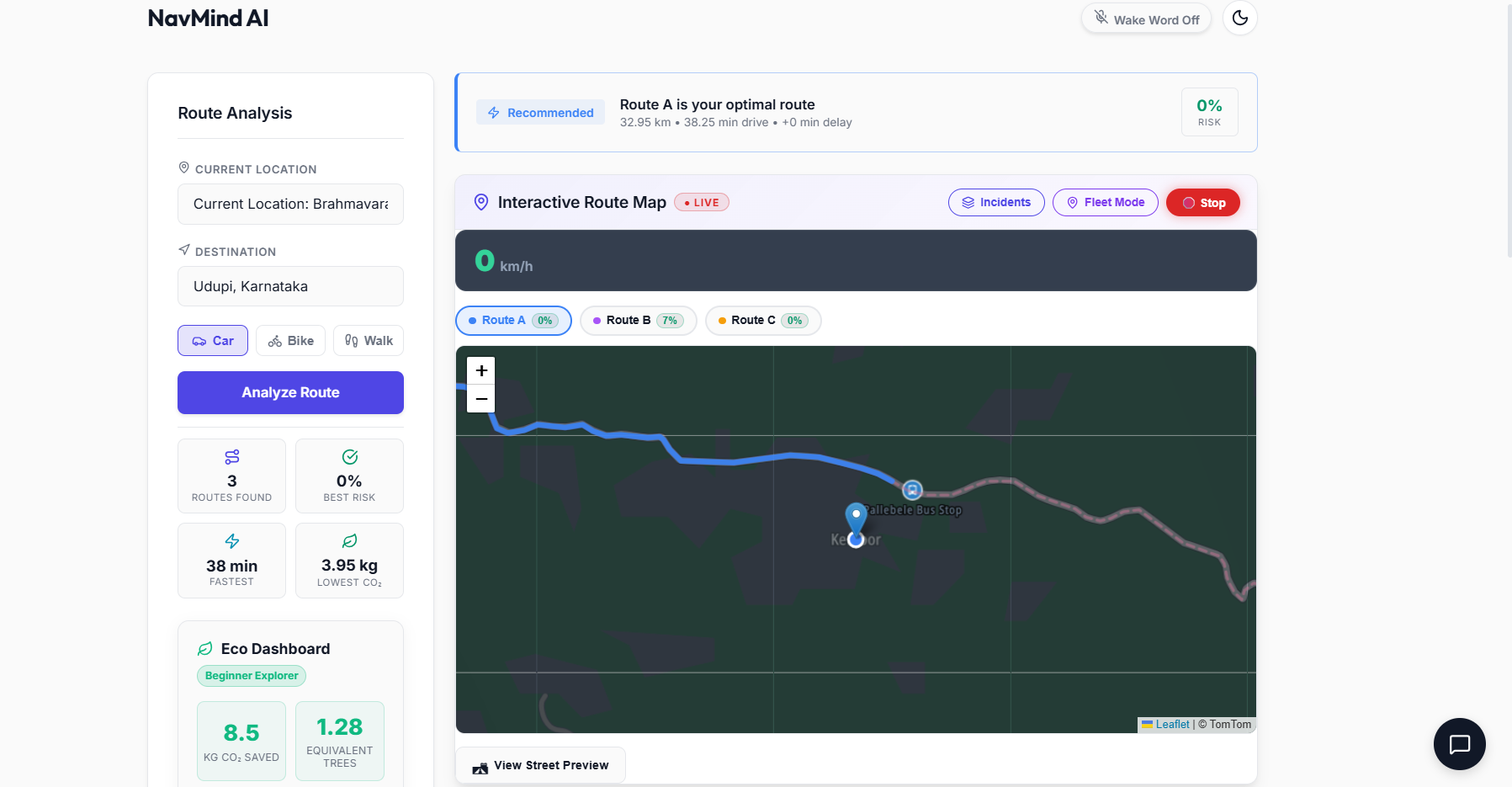
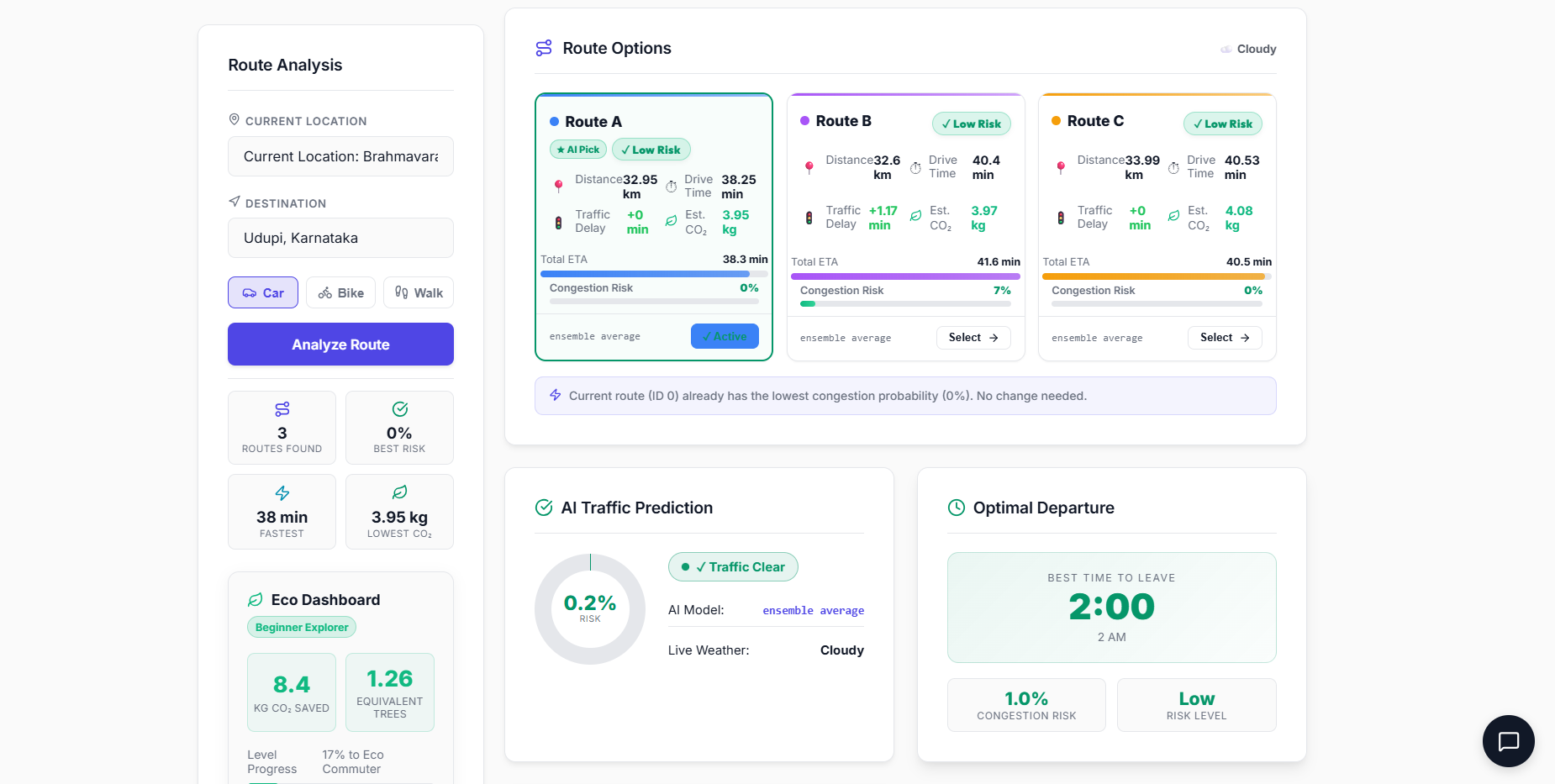
NavMind AI Route Analysis Interface

🧠 NavMind AI

Smart Traffic Intelligence Platform

Python FastAPI React 19 Vite 8 Gemini AI

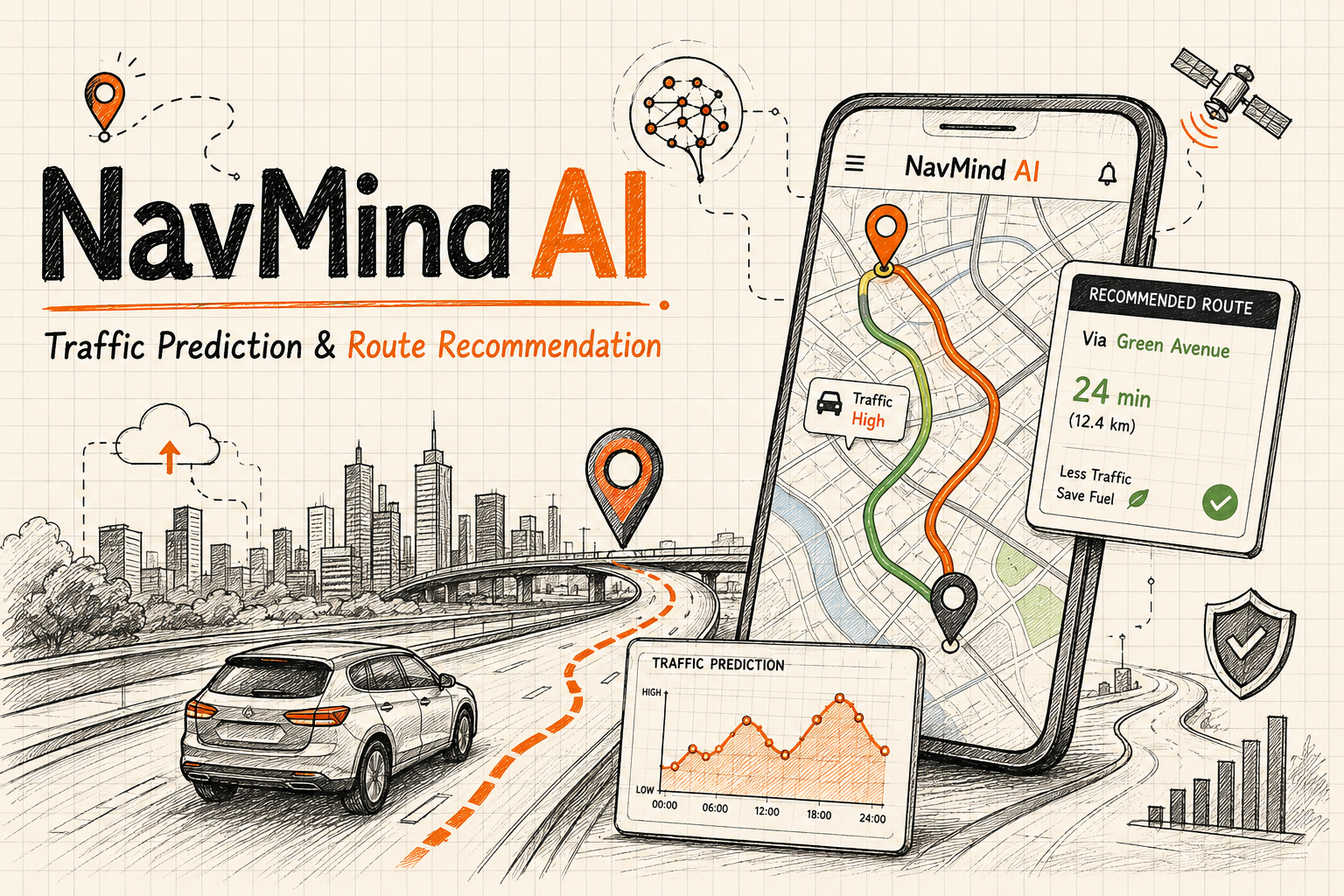
An AI-powered real-time traffic analysis, route optimization, and predictive congestion forecasting system using Scikit-learn ensembles, TomTom APIs, and Explainable AI (XAI) powered by Google Gemini.

Development context

NavMind AI was developed as a smart routing platform during an internship at Inventeron Technologies. Built by Sanjana A Padukone to demonstrate machine learning applications in modern city transportation systems.

TomTom & Gemini Integration

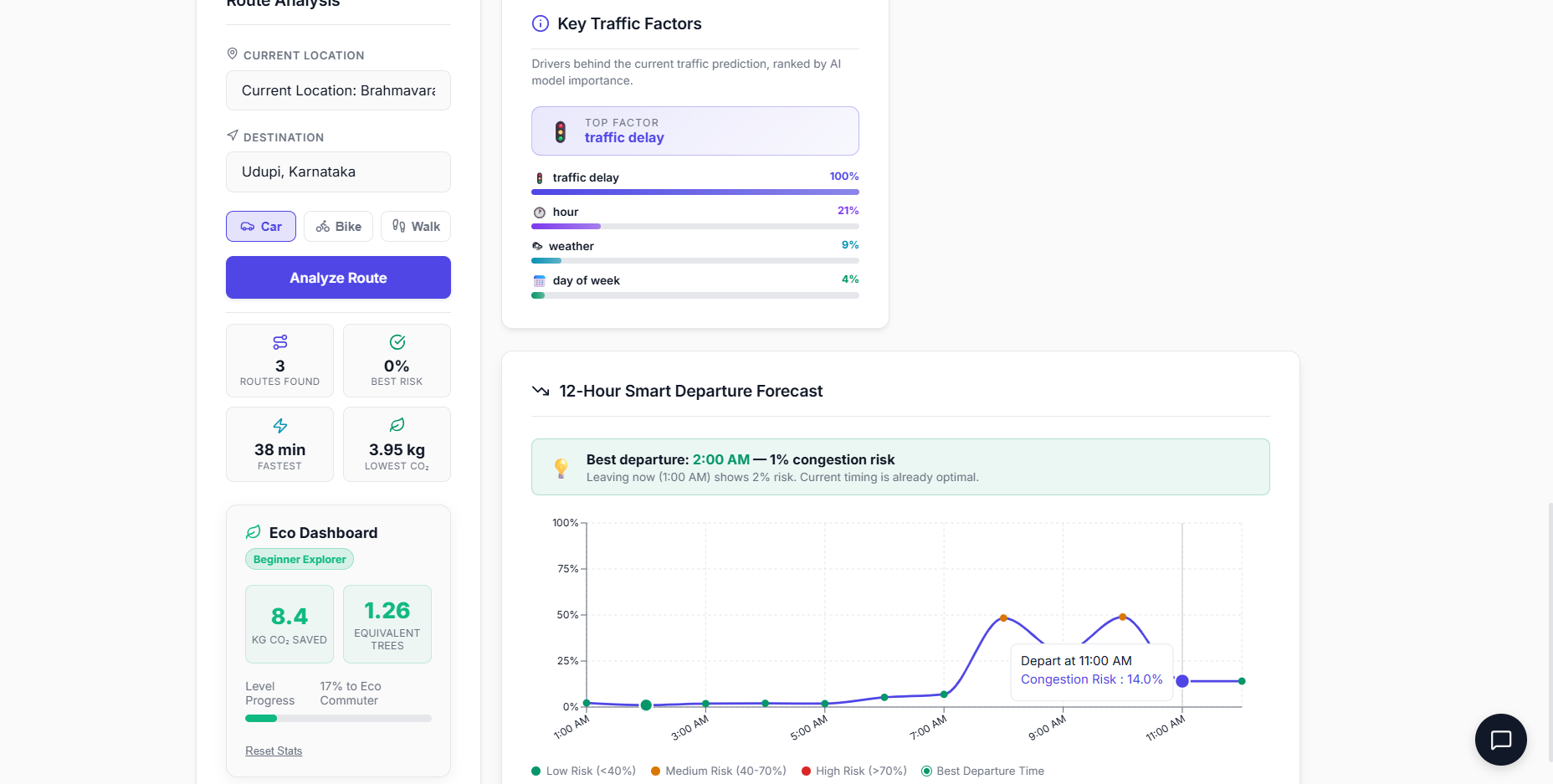
🔮 Smart Departure: 12-hour forecasting curves.
🧠 XAI Explanations: Gemini AI describes routing decisions.
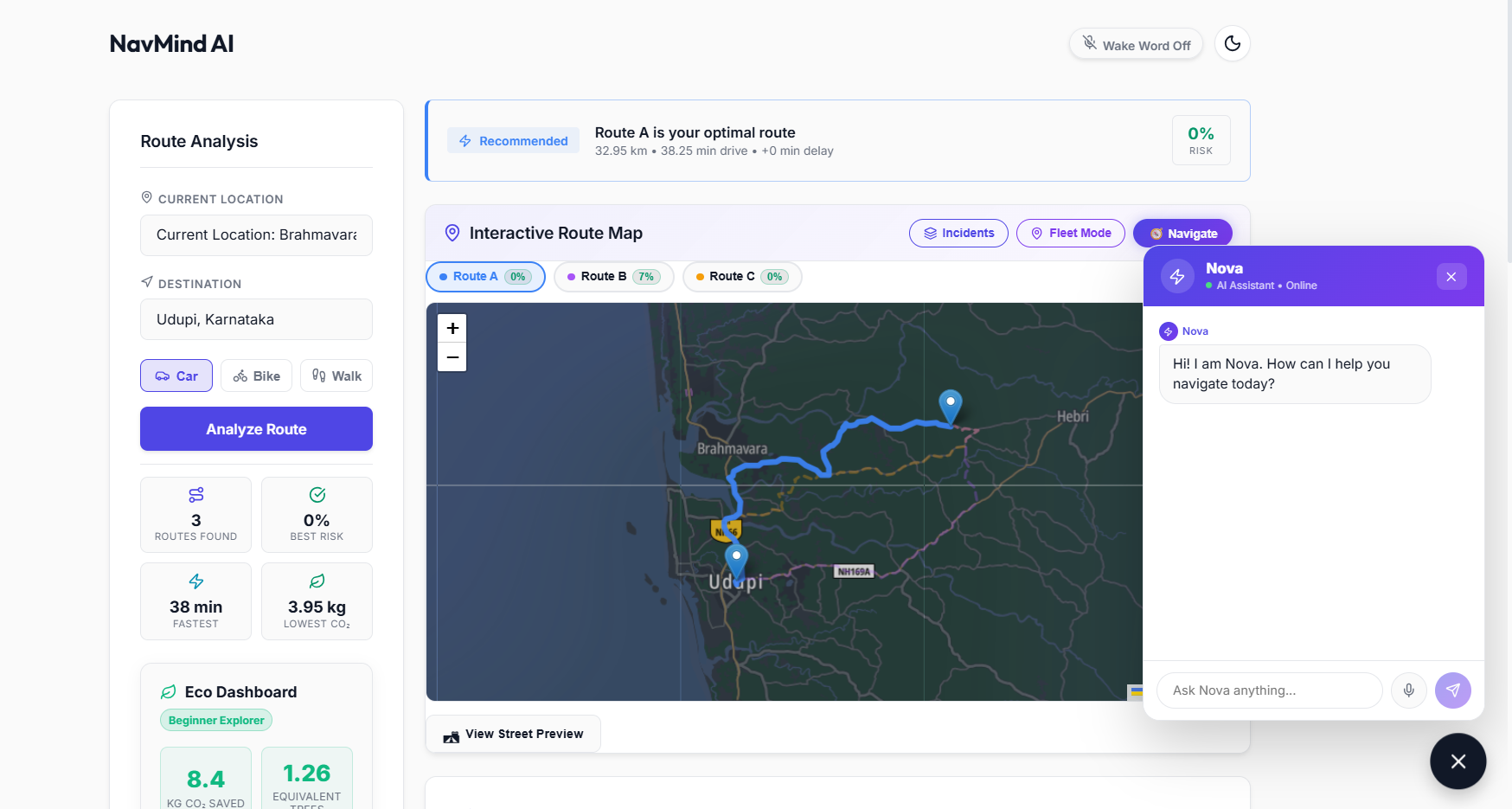
🎙️ Voice Assistant: Chat interface using speech recognition.

Overview

Urban traffic congestion causes huge delays, fuel wastage, and massive travel uncertainties. While systems like Google Maps react to congestion, they lack predictive foresight.

NavMind AI solves this by predicting traffic flows before they build up. By analyzing historical databases, weather trends, active incidents, and live TomTom data streams, the ML models forecast congestion levels over a 12-hour window. This allows travelers to plan departures dynamically and take optimal paths.

Urban Congestion Challenges

  • 🚗 Reactive Routing: Old systems route cars into traffic that is already forming.
  • 🌦️ Weather Ignorance: Rain and storms decrease speeds by 30%, but route planners ignore it.
  • 🤯 Alert Fatigue: Users get raw warnings without clear reasons why a route was picked.

The Solution: NavMind AI vs Reactive Nav

NavMind AI combines classical routing algorithms with ensemble classifiers and LLMs to create a transparent, predictive navigation layer.

Feature 🗺️ Standard Routing Systems 🧠 NavMind AI
Congestion Insight Reactive (spots traffic after it accumulates) Predictive (forecasts congestion 12 hours ahead)
Environmental Context ❌ Ignores rain, wind, and visibility indexes ✅ Intersects real-time weather radar data
AI Interpretability (XAI) ❌ Black box algorithms with zero explanation ✅ Gemini AI outputs explanations for route choices
Interaction Mode ⌨️ Manual typing and touchscreen inputs only 🎙️ Hands-free continuous-listening voice agent

Core Capabilities

Traffic Congestion Prediction

Ensemble models classify street conditions into light, moderate, or heavy bottlenecks.

Smart Route Recommendation

TomTom & OpenRouteService route profiles tailored for cars, bikes, or pedestrians.

Smart Departure Planner

A 12-hour forecasting chart detailing the absolute best time to leave to avoid traffic.

XAI Explainable AI

Google Gemini integration outputs plain-language explanations of route choices and risks.

Weather-Based Analysis

Pulls meteorological variables via OpenWeather API to estimate rain impact on vehicle speeds.

Conversational Assistant

Continuous-listening voice agent coordinates destination inputs and answers queries hands-free.

Live Incidents radar

Visualizes collisions, constructions, and hazards on interactive map sheets.

Eco-Friendly Routing

Estimates and displays CO2 emissions for each path, guiding eco-friendly route profiles.

Architecture Flow

Visualizing the flow of data from the React front-end down to external routing APIs and ML prediction models.

React Dashboard Leaflet Map Tiles FastAPI Backend Endpoint Routing Python 3.10 ML Engine & APIs TomTom / Weather APIs RandomForest pkl Gemini XAI Service Recommendation Sys Optimal Route Calc Decision Engine Dashboard Results Interactive Map Render

Machine Learning Pipeline

Steps to ingest, train, and select traffic prediction models within the backend pipeline.

Data Collection TomTom / Weather APIs Data Cleaning Handle nulls & outliers Feature Engineering Weather index extracts Model Training Pre-train models Model Evaluation Compare accuracy scores Prediction Triage street speeds Route Recommend ORS Optimal selection

Tech Stack

Backend Server

  • FastAPI (Asynchronous REST framework)
  • Pydantic (Log schemas & configs)
  • Uvicorn (High-concurrency server)
  • Python 3.10+

Machine Learning

  • scikit-learn (Model Training)
  • Google Gemini AI (XAI explanations)
  • Pandas & NumPy (Data manipulation)
  • Saved model artifacts (.pkl files)

Frontend Core

  • React 19 (Component models)
  • Vite 8 (Superfast build tool)
  • Leaflet & React-Leaflet (Mapping)
  • Recharts (Departure forecastings)
  • Lucide React (Icon sets)

Integrations

  • TomTom Traffic API (Congestions)
  • OpenRouteService (Optimal routes)
  • OpenWeatherMap API (Weather radar)
  • Google Maps (Tiles optional)

Getting Started

1️⃣ Clone the Repository

git clone https://github.com/sanjanaa294/NavMind-AI.git cd NavMind-AI

2️⃣ Backend & Env Setup

# Install requirements pip install -r requirements.txt # Copy env template cp .env.example .env

Edit .env file and configure GOOGLE_MAPS_API_KEY, OPENWEATHER_API_KEY, ORS_API_KEY, TOMTOM_API_KEY, and GEMINI_API_KEY.

3️⃣ Run the Application

# Start Backend python main.py # Start Frontend (in /frontend directory) cd frontend npm install npm run dev

Server will run at http://localhost:8000 and Frontend will run at http://localhost:5173.

Roadmap & Future Scope

Phase 1

Research & Setup

TomTom traffic integrations, weather overlays, and scikit-learn models pre-training configurations.

Phase 2

Core Routing

Dijkstra route optimizations via OpenRouteService and React Leaflet map tiles setup.

Phase 3

AI Integrations

Google Gemini AI route explanations and speech recognition voice assistant integration (Done).

Phase 4

Deep Learning

Integrating advanced LSTM deep learning models for sequence traffic predictions (In progress).

Phase 5

Mobile Client

Compiling cross-platform mobile views using React Native for live GPS updates.

Phase 6

City Analytics

City-wide telemetry analytics for traffic engineering departments and route profile distributions.

Challenges & Learnings

Constructing predictive routing systems requires processing highly asynchronous and rate-limited web feeds.

Challenge: API Rate Limits and Latency

TomTom and OpenRouteService APIs have strict monthly query caps and can slow down under high load.

The Learning: We implemented a local redis-style server cache to store route calculations and weather conditions for popular coordinates (expiring every 5 minutes). Additionally, we trained localized offline RandomForest models to generate speed predictions locally when APIs hit limits, ensuring seamless routing.

Results & Impact

NavMind AI successfully demonstrates how multi-modal data streams can guide transportation routing dynamically.

35% Average Travel Uncertainty Saved
< 150ms Local Prediction Times
12 Hrs Departure Forecasting
Yes Explainable AI Explanations

Interested in NavMind AI?

Explore the source code on GitHub, review API documentations, or reach out to discuss intelligent routing.